 Sable & Sparrow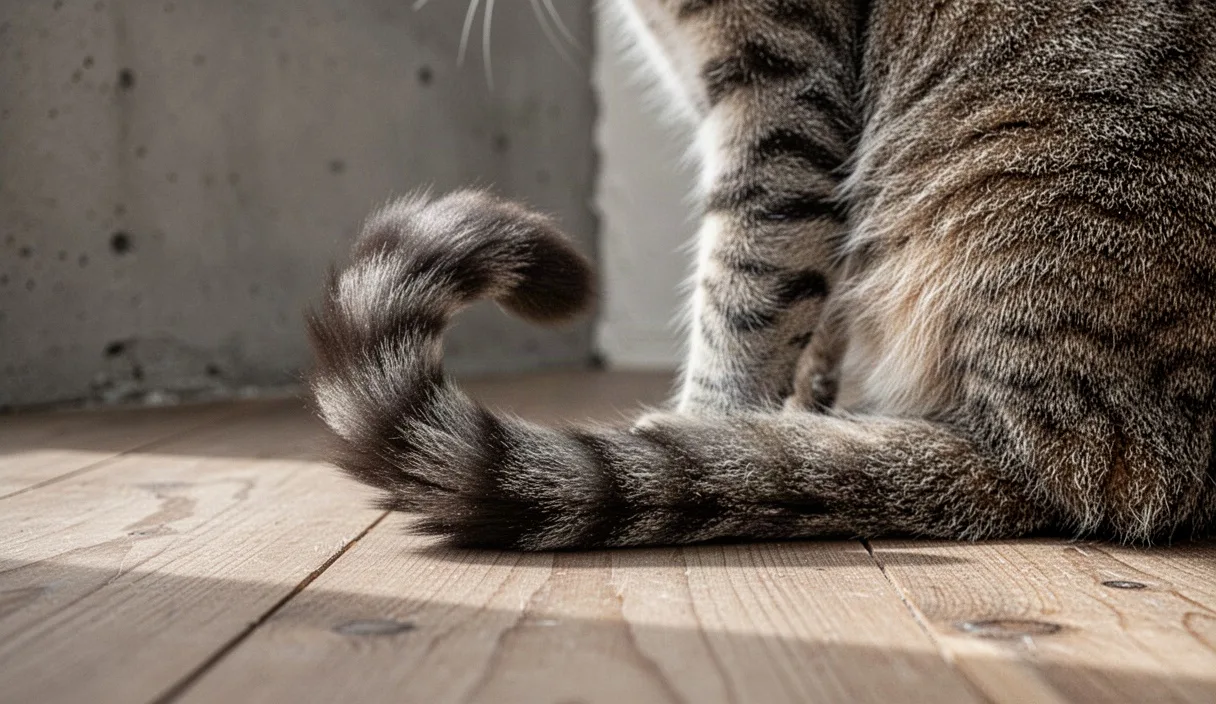
A cat's tail speaks before the cat does. It moves in small arcs, sudden flicks, slow curls, and each shape carries a different meaning. Learning to read it takes patience, not guesswork.
This guide breaks the tail into readable positions. It also shows how the tail works together with the ears and the body. None of this replaces a vet's opinion when behavior changes without explanation.
Why tail language matters
Cats do not rely on words. They rely on posture, and the tail is the most visible part of that posture.
A tail held high often signals ease. A tail pulled low often signals worry. The difference between the two can be seen from across a room, long before a person gets close enough to read the eyes or the whiskers.
Understanding tail position helps prevent misread greetings. A person who reaches for a cat with a tucked tail may get a scratch that feels sudden but was not sudden at all. The tail gave a warning first.
The confident tail
A relaxed, confident cat usually carries its tail upright, with a slight curve near the tip. The base of the tail stays loose, not rigid.
This is the tail most often seen when a cat walks toward a familiar person. It sways gently from side to side, almost like a soft pendulum, not a sharp swing.
Kittens raise their tails this way when approaching their mother. Adult cats keep the habit into adulthood, using it as a small flag of trust.
- Tail straight up, tip slightly curled: general ease.
- Tail up with a light quiver: excitement, often paired with a greeting sound.
- Tail up while walking briskly: a cat heading toward something it wants, like food or a person.
The nervous or fearful tail
A frightened cat pulls its tail down and often wraps it close to the body. The tail may tuck completely under the belly.
This low position reduces the target area during a threat. It is a defensive shape, not a relaxed one.
Some nervous cats lower the tail only partway, holding it level with the hocks. This half-lowered tail often appears in new environments, such as a first vet visit or a new room in the house.
A tail clamped tightly against the legs, combined with a lowered head, usually means the cat wants space, not attention.
The twitching or flicking tail
A twitching tail moves in short, controlled beats. It often shows focus, the kind seen right before a pounce on a toy or a bird outside a window.
A flicking tail moves faster and wider. It often shows irritation, especially when paired with flattened ears or a stiff body.
The difference between the two matters. A small twitch at the very tip during play is normal excitement. A wide, whip-like flick during petting is usually a request to stop.
| Movement | Likely meaning | Common context |
|---|---|---|
| Slow tip twitch | Focused interest | Watching prey or a toy |
| Fast tip flick | Mild irritation | Overstimulation during petting |
| Wide side-to-side lash | Stronger annoyance or agitation | Right before a bite or a swat |
| Full-body thump against the floor | High arousal | Right before a chase or a fight |
Tail signals to watch alongside ears
The tail rarely acts alone. Ears fill in details the tail cannot show by itself.
Forward ears with an upright tail usually mean calm interest. Flattened ears with a low or flicking tail usually mean stress or threat.
A cat with one ear turned sideways and a slow tail twitch may be listening to something in another room while still deciding how to react. Reading both signals together gives a clearer picture than reading either one alone.
- Ears forward, tail up: comfortable, open to interaction.
- Ears sideways, tail twitching slowly: alert, undecided.
- Ears flat, tail flicking fast: defensive, likely to escalate.
- Ears flat, tail tucked: fearful, likely to retreat.
When tail behavior changes suddenly
A sudden change in tail habit is worth noticing. A cat that always held its tail high but now keeps it low for days may be in discomfort.
Pain along the spine or the tail base can change how a cat carries it. So can pain in the hips or the lower back.
A drooping or limp tail, especially after a fall, a door closing on it, or rough handling, should be checked by a vet. Nerve damage in the tail is possible and is not something to diagnose at home.
Behavioral stress, such as a new pet in the house or a recent move, can also lower tail carriage for a period. If the low posture lasts more than a few days, a vet visit rules out physical causes first.
A short reference list of positions
This list is not exhaustive, but it covers the positions most owners will see day to day.
- Tail straight up, slight curve at tip: relaxed confidence.
- Tail straight up, puffed fully: fear or a startle response, often paired with an arched back.
- Tail horizontal, held loosely: neutral, casual movement.
- Tail low, close to the legs: nervousness.
- Tail tucked under the body: fear, wanting to disappear.
- Tail question-mark curve: friendly curiosity, common in kittens.
- Tail wrapped around the body while sitting: settled, resting state.
- Tail thumping the ground: high arousal, watch closely for the next move.
Common mistakes
One mistake is treating a wagging tail as a sign of happiness, the way it works with dogs. In cats, fast tail movement usually signals irritation, not joy.
Another mistake is ignoring the base of the tail. The tip can move for small reasons, but a stiff, rigid base combined with any tail motion signals real tension.
A third mistake is reading the tail in isolation. Without checking the ears, the eyes, and the body posture, the tail alone can be misread.
A final mistake is assuming every quiet tail means a quiet cat. Some cats hold very still right before a defensive swat, so stillness after warning signs is not a green light to keep petting.
Practical next steps
Start by watching one cat over a single day. Note how the tail sits during rest, during play, and during greetings.
Write down the position before touching or approaching. This builds a habit of checking first, reacting second.
If a tail position looks unusual for more than a couple of days, or if the tail seems limp, injured, or unresponsive, book a vet visit. A short exam can rule out pain or nerve issues early, before they become harder to manage.