 Sable & Sparrow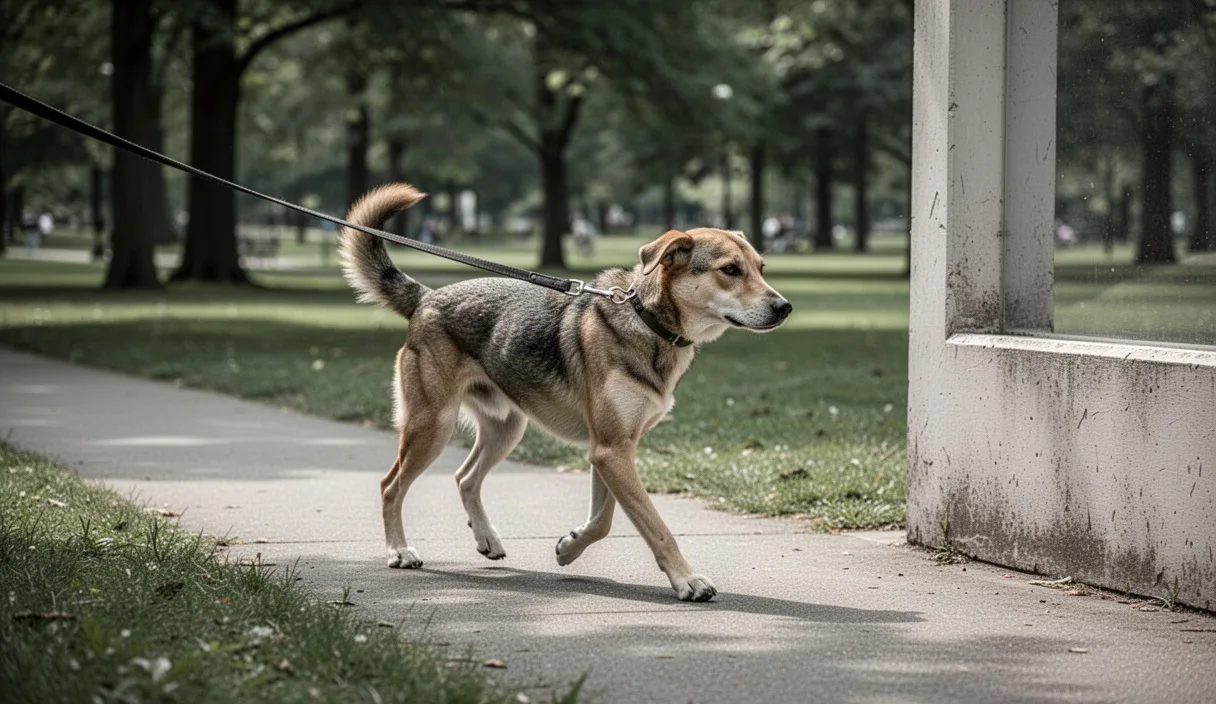
A dog's body speaks before its mouth does. The shift in weight, the set of the ears, the pace of the tail, these arrive seconds or minutes before a bark or a lunge. Walks put this language on constant display, because the world keeps offering new triggers: another dog, a skateboard, a child running.
Learning to read these signals does not require special training. It requires slower attention and a habit of checking in. This guide breaks the walk into observable stages, from calm to alert to reactive, so the signs become easier to catch in real time.
Why body language reads earlier than sound
Sound is a late signal. A growl or a bark usually follows a buildup that already happened in the muscles. By the time a dog vocalizes, the body has often been telegraphing for several seconds.
Ears rotate toward a sound before the dog reacts to it. Weight shifts backward or forward before a lunge or a retreat. A tail that was loose goes still before a bark starts. These changes are small, but they are visible if the handler is watching the dog instead of scanning the environment.
Most handlers watch the environment first. They look for the other dog, the jogger, the cyclist. The dog's own body gets checked only after something already happened. Reversing that order, body first, environment second, gives more time to respond.
The relaxed walking posture
A relaxed dog moves with loose, rolling shoulders. The back is level, not arched up or dropped low. The tail hangs or swings in a wide, slow arc, not a stiff flick.
The mouth is often slightly open on a walk, especially in warm weather, with a soft edge to the lips. Ears sit in their natural position, whatever that is for the breed, neither pinned back nor locked forward.
Sniffing the ground, glancing at passing dogs without stopping, and an even walking rhythm are all part of this baseline. A relaxed dog can be redirected easily, comes back to a loose leash after a distraction, and does not hold tension in the neck or jaw.
- Loose tail, moving in a wide arc
- Soft mouth, sometimes slightly open
- Even stride, no sudden stops
- Ears in a neutral, natural position
- Quick glances at distractions, then attention returns to the walk
Signs of rising alertness
Alertness is not yet a problem. It is information. A dog noticing something new will often stop sniffing and lift the head.
The ears move first in many dogs. They rotate toward the sound or sight, sometimes both ears at once, sometimes one at a time. The tail slows down or holds at a fixed height instead of swinging.
Breathing may pause briefly. The dog's mouth can close if it was open. The body does not stop moving yet, but the pace often changes, either slower and more careful, or slightly faster toward the object of interest.
| Body part | Relaxed state | Rising alertness |
|---|---|---|
| Ears | Neutral position | Rotated toward stimulus |
| Tail | Loose, wide arc | Slower, held at fixed height |
| Mouth | Soft, open | Closes, lips tighten slightly |
| Breathing | Steady panting | Brief pause or hold |
| Gait | Even stride | Slower or slightly quickened |
None of these signs mean the walk needs to stop. They mean it is worth watching what happens next, and deciding whether distance or distraction is needed.
Stiffening and weight shifts
Stiffening is the next stage past alertness. The dog's body becomes still in a way that looks different from resting stillness. The legs lock, the neck extends, and the weight moves forward onto the front paws.
A forward weight shift usually points toward approach or confrontation. A backward weight shift, with the hips lowering slightly, usually points toward avoidance or retreat. Both are stress responses, just aimed in different directions.
The hackles, the strip of fur along the spine, may rise during this stage. Raised hackles do not always mean aggression. They can appear with excitement, fear, or arousal of almost any kind. The hackles are a signal of intensity, not a signal of intent.
Handlers who notice stiffening have a narrow window to act. Waiting past this stage often means dealing with a bark, a lunge, or a full retreat instead of a quieter redirection.
- Legs lock, body becomes rigid
- Weight shifts forward, toward confrontation
- Weight shifts backward, toward avoidance
- Hackles may rise along the spine or shoulders
- Head lowers slightly while eyes stay fixed on the target
What tail carriage adds to the picture
The tail rarely tells the whole story on its own. It works best combined with the ears, the mouth, and the weight of the body.
A high, stiff tail with small, fast movements at the tip is different from a high tail with a loose, wide wag. The first often signals tension or arousal. The second often signals excitement without much stress.
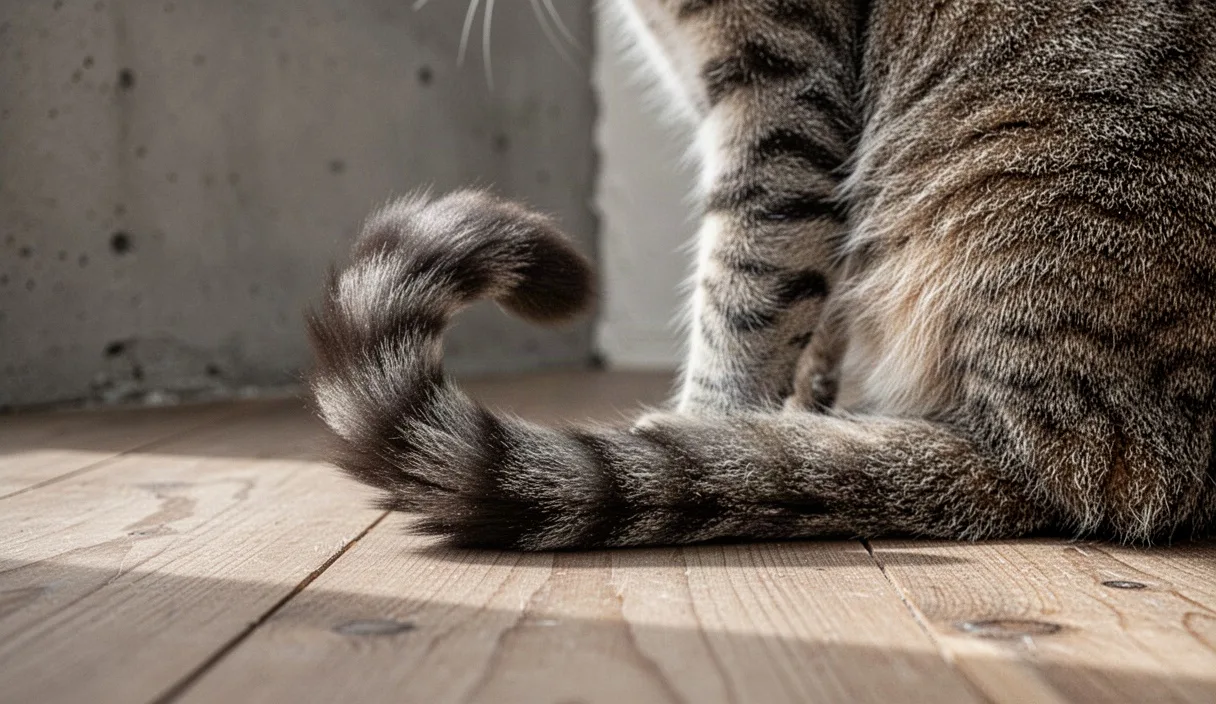
A tail tucked under the body signals fear or submission. A tail held level but completely still, not wagging at all, often signals a dog that is assessing something before deciding how to respond.
Breed shape changes what "neutral" looks like. A Greyhound's tail sits low even when relaxed. A Husky's tail often curls up over the back at rest. Knowing the individual dog's normal tail position matters more than comparing to a generic chart.
Reacting before escalation
Once alertness or stiffening appears, the handler has choices. Adding distance from the trigger is usually the simplest option. Crossing the street, turning a corner, or stepping behind a parked car can lower the intensity of what the dog is reacting to.
Calling the dog's name in a normal tone, then rewarding attention with a small treat, can redirect focus before it locks onto the trigger. This works best when practiced regularly, not only in high-stress moments.
Below is a simple sequence some handlers use when a dog begins to stiffen toward another dog or person:
- Notice the stiffening or weight shift.
- Increase distance immediately, at least ten to fifteen feet if possible.
- Say the dog's name once, in a normal voice.
- Reward any glance back toward the handler.
- Continue walking in a new direction, away from the trigger.
If a dog regularly escalates past this point, growling, lunging, or snapping on walks, a certified trainer or a veterinary behaviorist can help identify the pattern and build a plan suited to that specific dog. This is not something to guess through repeatedly if it keeps happening.
Practicing observation on routine walks
The best place to learn these signals is on ordinary walks, not high-stress ones. A quiet street with occasional dog sightings gives enough small moments to practice reading the body without much risk.
One practical exercise: for one week, narrate silently to yourself what the dog's ears, tail, and weight are doing every time another dog appears in view. Do this before deciding whether to intervene. This builds the habit of checking the body first.
Photographs or short videos, reviewed later, can also help. Slow motion often reveals a stiffening moment that passed too fast to catch live. Comparing the dog's baseline resting posture to its walking posture on a normal day gives a personal reference point, which matters more than any generic description.
Common mistakes
- Watching the environment instead of the dog's body first.
- Assuming a wagging tail always means a relaxed or friendly dog.
- Waiting for a bark or lunge before responding, instead of acting at the stiffening stage.
- Ignoring breed-specific posture, like a naturally low or curled tail, and misreading it as tension.
- Repeating the same trigger exposure without changing distance or distraction, hoping the reaction will fade on its own.
Next steps
Start with one walk this week focused only on observation. Skip corrections. Just watch the ears, the tail, and the weight shifts, and note when they change.
Write down what preceded each shift, a dog across the street, a bicycle, a loud car. Patterns usually appear within a few walks.
If stiffening or reactivity shows up often, at close range or with strong intensity, a session with a certified trainer can help build a plan specific to that dog. Body language is a starting point for understanding, not a full solution on its own.