 Sable & Sparrow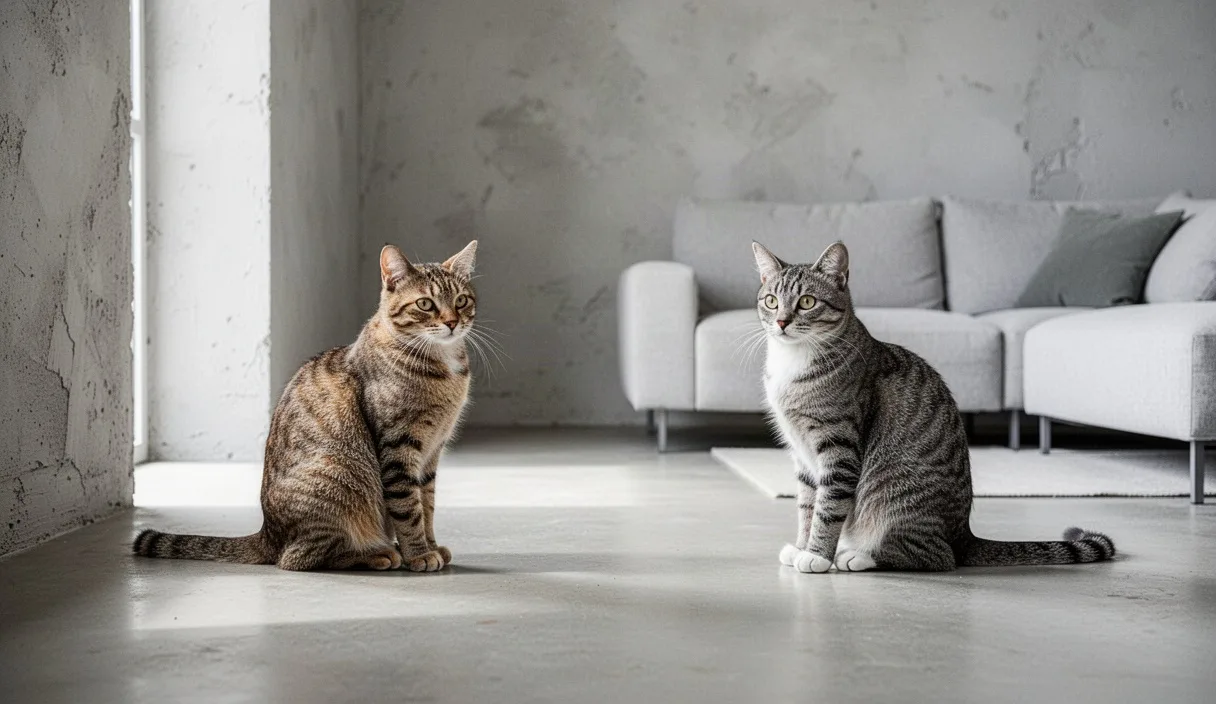
A new cat changes a home. The resident cat feels it first, in the air, in the smell of a carrier, in a sound from another room.
This guide walks through a slow introduction, week by week, sign by sign. It does not promise a friendship. It offers a way to lower the odds of fear settling in for good.
Why slow introductions matter
Cats are territorial by nature. A resident cat has mapped every room, every windowsill, every corner of the house by scent.
A new cat disrupts that map in a single afternoon. The resident cat notices before any visual contact happens, often through smell alone.
Rushed introductions raise stress hormones in both cats. This stress can show up as hiding, appetite loss, or spraying, sometimes weeks later.
A slow approach spreads the change over many days. It gives both cats time to adjust their sense of who lives here now.
Setting up separate spaces first
The new cat needs one room of their own for the first stretch of time. A spare bedroom, a large bathroom, or a converted office works.
This room holds a litter box, food, water, a bed, and a few toys. Nothing shared with the resident cat, not yet.
The resident cat keeps the rest of the house. Their routines stay untouched: same feeding spot, same sleeping perch, same schedule.
A basic setup checklist for the new cat's room:
- One litter box, cleaned daily
- Food and water bowls placed away from the litter box
- A hiding spot, such as a covered bed or a box
- A scratching post or pad
- A closed door, at all times, during this stage
This separation usually lasts a minimum of five to seven days. Some cats need two or three weeks before moving forward. There is no fixed calendar here, only the cats' own pace.
Scent exchange techniques
Before either cat sees the other, they smell each other through the house. Scent is the first real introduction.
A simple method: take a soft cloth and rub it gently along the new cat's cheek and body. Leave that cloth near the resident cat's food bowl, not directly on it.
Do the same in reverse. Rub a cloth on the resident cat and place it inside the new cat's room, again near food but not touching it.
Watch how each cat reacts to the scent. Sniffing, then walking away, is a calm response. Hissing, growling, or refusing to eat near the cloth signals the pace needs to slow down.
A second scent technique involves swapping bedding between the two spaces every two to three days. This spreads a lower, more constant level of scent through both rooms.
Some owners also swap the cats' locations for short periods, letting the new cat explore the main house while the resident cat investigates the new cat's room. Each cat gets the other's smell without the other cat present.
The first visual meeting
Visual contact comes only after scent exchange feels calm on both sides, usually not before day seven.
A cracked door, a baby gate, or a screen door works well for this stage. Both cats can see each other but cannot make direct contact.
Keep the first visual meeting under ten minutes. Offer treats or a meal on each side of the barrier, so each cat associates the other's presence with something good.
End the session before either cat shows stress. A calm ending, even a short one, matters more than a long session that turns tense.
What a calm first meeting looks like
- Cats glance at each other, then look away
- Ears stay in a neutral, forward position
- Tails move slowly, without thumping
- Both cats eat or accept treats near the barrier
Reading tension between the cats
Cats communicate mostly through posture, not sound. Learning to read that posture matters more than any schedule.
| Signal | Likely meaning |
|---|---|
| Flattened ears, low crouch | Fear or defensiveness |
| Slow blinking toward the other cat | A relaxed, non-threatening signal |
| Puffed tail, arched back | High alarm, possible fight risk |
| Frozen stare, stiff body | Tension building toward a reaction |
| Rolling onto the side, relaxed belly | A comfortable, low-guard state |
Hissing on its own is not always a crisis. It often means "give me space," and the cats sort that out without a fight.
A frozen stare followed by stillness is a stronger warning sign than open hissing. This posture often comes right before a lunge.
If either cat stops eating, hides for most of the day, or shows signs of illness, a veterinarian visit is worth scheduling. Stress can sometimes mimic or worsen a physical health issue.
Extending time together gradually
Once visual meetings stay calm for three or four sessions in a row, the barrier can come down for short, supervised periods.
Start with five to ten minutes in a neutral room, one without the resident cat's favorite bed or the new cat's litter box.
Keep a second person present if possible, one adult per cat, so a tense moment can be interrupted quickly without grabbing either animal.
A general pacing guide for extending time together:
- Days one through three of visual meetings: ten minutes per session, once or twice daily
- Days four through seven: fifteen to twenty minutes, same frequency
- Week two: thirty minutes, with toys introduced for shared, low-pressure play
- Week three and beyond: supervised free time, gradually extended toward full-day access
Full integration, meaning open access to the whole house without supervision, often takes four to eight weeks. Some households take longer, and that is common, not a failure.
When to slow down or reset
Setbacks happen. A hiss, a swat, or a chase does not erase the progress made in earlier weeks.
A reset means going back to the previous stage, not all the way to day one. If free time in a shared room caused a fight, drop back to visual meetings with a barrier for another week.
Watch for patterns rather than single incidents. One growl during a first meeting is normal. Growling at every single meeting, over several days, suggests the pace is too fast.
If tension does not ease after eight to ten weeks of steady effort, a certified cat behaviorist or a veterinarian familiar with feline behavior can help assess the situation directly.
Common mistakes
- Skipping the separate-space stage because the cats "seem fine" on day one
- Forcing physical contact, such as holding one cat near the other
- Punishing hissing or growling, which can add fear rather than reduce it
- Removing the barrier too soon after a single calm meeting
- Ignoring appetite loss or hiding as simple "adjustment," without ruling out illness
Next steps
Set up the new cat's room today, if it is not ready already. This single step slows nothing down and prevents an accidental first encounter.
Choose a scent-swap routine and keep it consistent for at least five days before moving toward a visual meeting.
Track each session in a simple notebook or phone note: date, duration, and what the body language looked like. Patterns become clearer on paper than in memory.
If either cat shows ongoing signs of distress beyond the first month, a conversation with a veterinarian is a reasonable next move, not an overreaction.