 Sable & Sparrow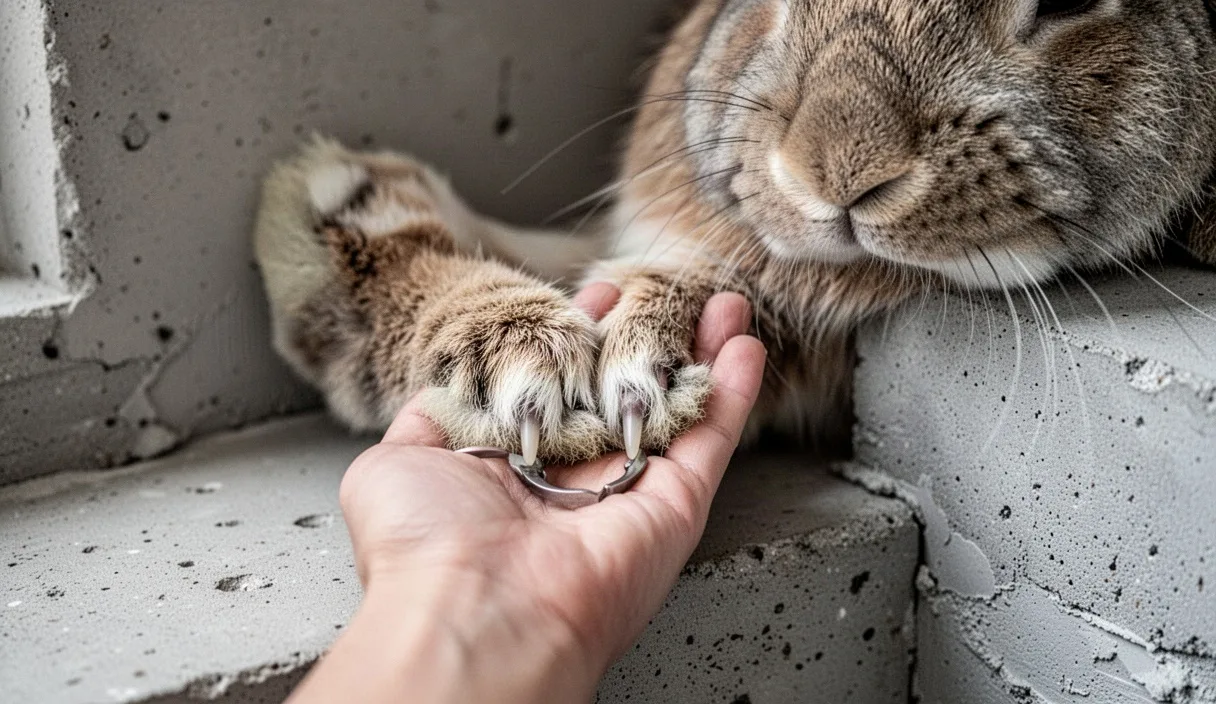
Rabbit nails grow fast. Left alone, they curl, snag, and sometimes tear. A trim every few weeks keeps the paws comfortable and the litter box clean of scratch marks.
This routine breaks the task into small, repeatable steps. It works for a first-time owner and for a rabbit who has never had a nail trim before. Go slow. Speed is not the goal here.
Tools needed before starting
Use a trimmer made for small animals. Cat claw scissors work well. Human nail clippers are too narrow for most rabbit nails and can crush rather than cut.
Keep styptic powder within reach. It stops bleeding fast if a nail is cut too short. A clean towel and a small dish of treats help too.
- Small animal or cat nail clippers
- Styptic powder or cornstarch
- A soft towel
- A flashlight or phone light for dark nails
- Treats for after
Lay everything on a table before picking up the rabbit. Searching for a tool mid-trim breaks the calm you just built.
Getting the rabbit calm first
Choose a quiet room. Turn off the television. Rabbits read tension in a room the same way they read it in a body.
Sit on the floor rather than standing over the rabbit. A lower position feels less like a threat. Let the rabbit sniff the clippers before any nail is touched.
Stroke the ears and the space between the eyes. Most rabbits settle within a minute or two under this kind of touch. If the rabbit stays tense after five minutes, stop and try again later that day.
Some owners wrap the rabbit loosely in a towel first. This is optional. It helps with a wriggly rabbit but is not needed for a calm one.
The correct holding position
Hold the rabbit against your chest, facing away from you. One arm supports the back legs. The other hand is free to lift each paw.
Never hold a rabbit only by the front legs or by the scruff. The spine of a rabbit is thin and can be hurt by sudden struggling in this position.
A second person makes this easier. One holds, one trims. If you are alone, sit with your back against a wall so the rabbit cannot back away from you.
| Position | Best for | Risk if done wrong |
|---|---|---|
| Chest hold, facing away | Most rabbits | Low risk if legs are supported |
| Lap wrap with towel | Wriggly or nervous rabbits | Can raise stress if too tight |
| Table restraint, no towel | Very calm, trained rabbits only | Rabbit can jump or bolt |
Finding the quick
The quick is the pink line inside the nail. It carries blood and nerves. Cutting into it hurts the rabbit and causes bleeding.
On light-colored nails, the quick is easy to see under a flashlight. On dark nails, hold the paw up to a bright light and look for a faint shadow near the base.
If the quick cannot be seen at all, trim only the very tip, about a millimeter at a time. This is slower but safer, especially on black nails.
Front paws usually have shorter quicks than back paws. Trim front nails a little closer than back ones, but still leave a small margin past the quick.
Trimming technique step by step
- Lift one paw gently and spread the toes with two fingers.
- Look at the nail from the side, not from above, to see the curve of the quick.
- Place the clipper about two millimeters past where the quick ends.
- Cut in one quick, clean motion. Do not saw back and forth.
- Move to the next toe. Repeat for all nails on that paw.
- Switch paws and continue until all four are done.
Rabbits have a small fifth nail higher on the front paws, called the dewclaw. It does not touch the ground and grows faster than the others. Check it every time, since it is easy to miss.
If the rabbit tenses or pulls a paw back, stop for a few seconds. Let the paw rest against your hand before trying again. Forcing the paw still often makes the rabbit fight harder.
What to do if bleeding occurs
A cut into the quick bleeds fast but is rarely serious on its own. Press styptic powder or cornstarch directly onto the nail tip with light pressure for about thirty seconds.
Keep the rabbit still and calm during this. Movement spreads the powder before it can seal the vessel.
If bleeding continues past a few minutes, or the rabbit seems to be in ongoing pain, contact a vet. Persistent bleeding is uncommon but is worth a professional check rather than guessing at home.
After the bleeding stops, finish trimming the remaining nails if the rabbit is calm enough. If not, stop the session and continue the next day.
Setting a regular trimming schedule
Most rabbits need a trim every three to four weeks. Nail growth varies by rabbit, so watch the length rather than the calendar alone.
A nail that touches the ground and lifts the toe slightly is too long. A nail that curls into a hook shape has gone too far past due.
| Sign | Meaning |
|---|---|
| Nail clicks on hard floor | Trim is due soon |
| Nail touches ground and lifts the toe | Trim is overdue |
| Nail curls into a hook | Trim is well overdue, go slowly |
Write the date after each trim on a calendar or phone note. This removes the guesswork and helps notice if growth speed changes over time, which can sometimes point to a diet or health question worth raising with a vet.
Common mistakes
Trimming all four paws in one long session when the rabbit is already stressed. Splitting the trim across two short sessions is often calmer for both of you.
Using human nail clippers, which tend to crush rather than cut a rabbit's rounder nail shape.
Guessing on dark nails instead of trimming in small amounts. A little at a time avoids most bleeding.
Skipping the dewclaw, since it is out of sight and grows unevenly.
Next steps
Start with one paw the first time, not all four. Build confidence slowly, for both you and the rabbit.
Keep the styptic powder in the same spot every time, so it is never far from hand during a trim.
If a rabbit fights hard every single session, or nails seem unusually thick or brittle, a short visit to a vet can rule out anything beyond normal growth. Otherwise, a calm room, steady hands, and a small pair of clippers are usually all this routine needs.