 Sable & Sparrow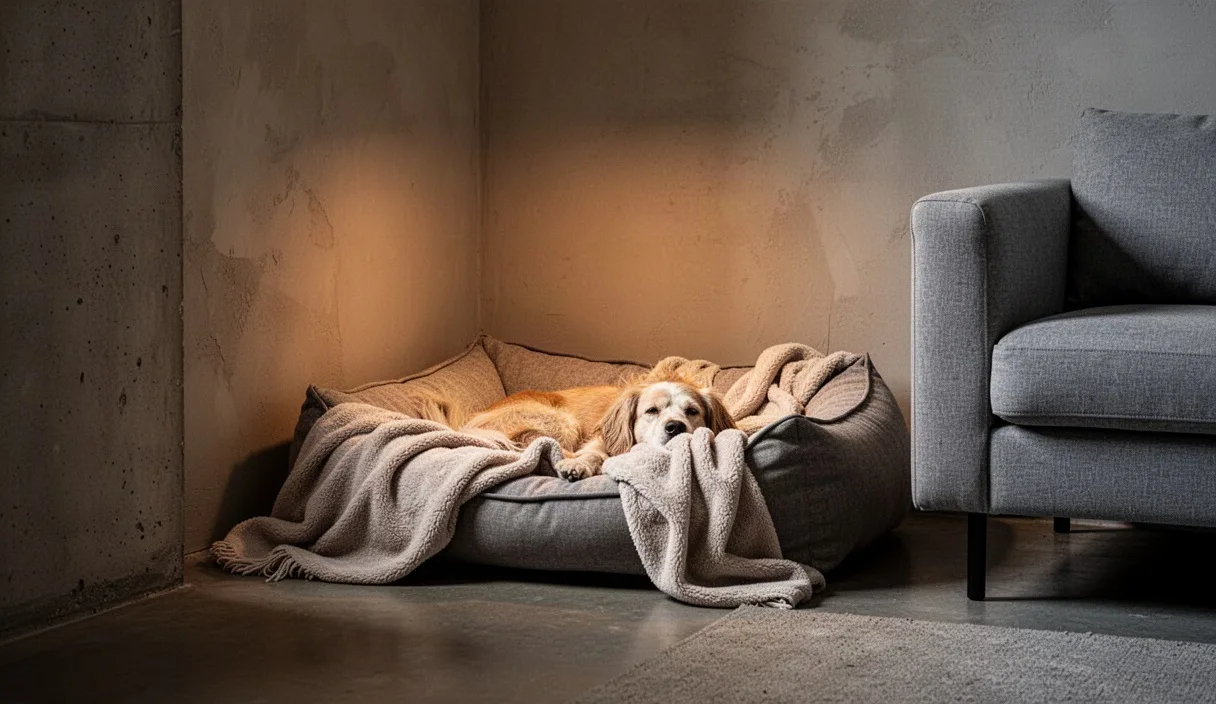
An anxious dog needs a place that belongs only to them. Not a crate for punishment. Not a corner they get pushed into. A retreat they choose, again and again, because it feels safe.
This guide walks through building that space. Where to put it. What goes inside. What stays out. How to introduce it without force. The goal is simple: a spot the dog trusts.
Why a retreat space helps an anxious dog
Dogs regulate stress through withdrawal. Not through confrontation, not through play. A retreat space gives them a way to step out of a stressful moment on their own terms.
Anxiety in dogs often shows as pacing, panting, or hiding under furniture. A designated space redirects that instinct toward something safer than a gap behind the sofa.
Veterinary behaviorists sometimes call this a "safe zone" in treatment plans for noise phobia or separation anxiety. It is not a cure. It is a tool that supports other work, including training or medication prescribed by a vet.
A consistent retreat space also lowers the number of triggers a dog has to manage at once. During a thunderstorm, the dog does not need to find safety. It already knows where it is.
Choosing the right location
Pick a low-traffic corner. Not the center of the living room, not near the front door where visitors knock.
Good locations share a few traits:
- Away from windows that face the street.
- Not directly under a heating or air conditioning vent.
- Near a wall on at least two sides, for a sense of enclosure.
- Close enough to the family's main living area that the dog is not isolated.
A quiet bedroom corner often works better than a hallway. Hallways carry foot traffic and echo sound. A bedroom, especially one the dog already sleeps in, cuts down on both.
Avoid the laundry room if the washing machine or dryer runs often. The vibration and noise undercut the purpose of the space.
What to put in the space
Start with bedding. A washable dog bed or a folded blanket works. The material matters less than the fact that it smells like the dog, not like store packaging.
Add one or two items with familiar scent: an old t-shirt worn by the owner, or a toy the dog already chews. New items introduce new smells, which can work against the goal.
A small table can help decide what belongs:
| Item | Purpose |
|---|---|
| Worn blanket or bed | Familiar scent, physical comfort |
| Chew toy already in use | Low-stakes distraction |
| Water bowl | Access without leaving the space |
| Soft-sided crate cover (optional) | Reduces visual stimulation |
Some owners add a white noise machine or a fan set on low. This is optional and depends on the dog. A dog sensitive to sudden sounds may benefit from a steady background hum that masks sharp noises like car doors or dishes clinking.
What to leave out
Skip strong-smelling candles, diffusers, or air fresheners near the space. A dog's sense of smell is far more sensitive than a human's, and synthetic scents can turn a calming corner into an irritant.
Leave out toys that squeak or rattle. These invite play, not rest. The space should signal down time, not another round of fetch.
Avoid placing the space near a TV or speaker. Even at low volume, sudden shifts in sound undercut the sense of predictability the dog needs.
Do not lock the dog inside, even in a covered crate, unless a vet or trainer has specifically recommended confinement training for a documented reason. A retreat space works because the dog can leave whenever it wants.
Introducing the space slowly
Do not carry the dog to the space and expect it to stay. Let the dog discover it.
Drop a few treats near the entrance over two or three days. Then place treats just inside. This builds a positive association without forcing entry.
Some trainers suggest a specific cue, a word like "settle" or "place," said in a calm tone each time the dog steps in on its own. Repeated consistently, the word starts to predict rest rather than command it.
Give the process one to two weeks before expecting the dog to use the space unprompted during a stressful event, like a vacuum cleaner running or a delivery knock. Dogs build trust in a space through repetition, not a single successful visit.
Signs the setup is working
Watch for the dog choosing the space without being led there, especially during a known trigger like a thunderstorm or fireworks.
Other signs include:
- The dog naps in the space during quiet daytime hours, not only during stress.
- Body language softens once inside: ears relax, tail stops tucking, breathing slows.
- The dog returns to the space after a startle, rather than pacing the house.
If the dog avoids the space entirely after two or three weeks, something about the location or contents may be working against it. A draft, a noisy pipe, or a scent the dog dislikes are common culprits.
Progress is rarely linear. A dog might use the space well for a week, then avoid it during a visit from unfamiliar guests. This does not mean the setup failed. It means the trigger that week was stronger than the pull of the space.
Adjusting the space over time
Revisit the setup every few months, especially after a move, a new pet, or a change in the household routine.
If the dog has started chewing bedding out of stress rather than comfort, switch to a more durable, washable option and mention the behavior to a vet. Destructive chewing inside a retreat space can sometimes signal anxiety that needs additional support beyond environmental changes.
Seasonal shifts matter too. A space near a window that felt cool in summer may turn drafty in winter. Move the bed a few feet if needed rather than abandoning the location altogether.
As a dog ages, hearing or vision changes can shift what feels safe. An older dog with reduced hearing may no longer need the white noise machine. A dog with vision loss may benefit from keeping the space in a fixed location it has fully memorized, rather than moving it at all.
Common mistakes
Placing the space in a high-traffic hallway defeats the purpose before it starts.
Introducing too many new items at once, rather than building familiarity slowly, can make the space feel foreign instead of safe.
Using the space as a punishment location, even once, undoes weeks of positive association. A retreat space and a timeout corner cannot be the same place.
Expecting immediate results. Some dogs adapt within days. Others take a month or longer, and a small number need guidance from a certified trainer or veterinary behaviorist if anxiety is severe or worsening.
Next steps
Choose one quiet corner this week. Add bedding that already smells familiar. Skip anything scented or noisy.
Drop a few treats near the space daily for the first few days. Do not force entry.
Track how the dog uses it over the next month, noting which triggers send the dog there and which do not. If anxiety symptoms are frequent, intense, or affecting the dog's eating or sleeping, talk to a veterinarian before relying on environmental changes alone.