 Sable & Sparrow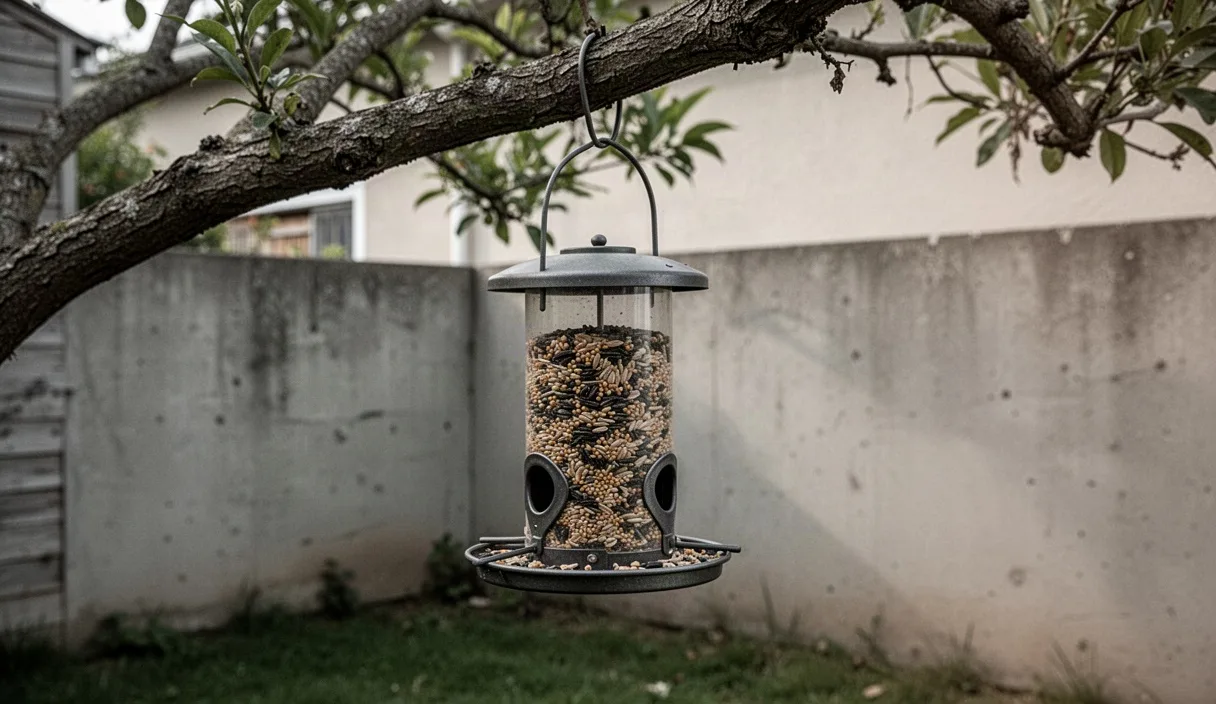
A bird feeder looks simple. Hang it, fill it, wait.
But the details decide whether birds return, or whether the feeder becomes a mess of wet seed and hungry squirrels. This checklist walks through the setup, one decision at a time.
Choosing a feeder location
Start with visibility. You want to see the feeder from a window you actually use, like a kitchen or a desk.
Birds want cover nearby. A shrub or small tree within 10 to 12 feet gives them a place to retreat if a hawk passes overhead.
Avoid low spots that collect water. Wet ground under a feeder turns into mud and mold within a week or two.
Flat, open ground works better than a slope. A slope makes dropped seed roll away, and it makes squirrels' job easier.
Distance from windows and cover
Window strikes happen more than people think. The Cornell Lab of Ornithology estimates that up to a billion birds die from window collisions in the U.S. each year.
Two distances work. Either place the feeder within 3 feet of the glass, so a bird can't build up speed before hitting it, or place it more than 30 feet away, so there's room to react.
The middle distance, roughly 5 to 15 feet, is the riskiest zone. Birds get startled, take off fast, and don't see the glass in time.
Cover matters too, but it can't be too close. Within 3 feet, cats can hide and ambush. Keep dense shrubs at least 8 feet from the feeding area itself.
Picking the right seed mix
Not all seed mixes attract the same birds. Cheap mixes with milo, wheat, and red millet often sit untouched and rot.
Black-oil sunflower seed draws the widest range of songbirds: chickadees, nuthatches, cardinals, finches. It has a thin shell and high fat content.
Nyjer seed, sometimes called thistle, is small and oily. It works well in a mesh or tube feeder for goldfinches.
Suet cakes bring in woodpeckers and wrens, especially in cold months when birds need extra fat.
| Seed type | Common visitors | Feeder style |
|---|---|---|
| Black-oil sunflower | Chickadees, cardinals, finches | Tube, hopper |
| Nyjer (thistle) | Goldfinches, siskins | Mesh, tube |
| Suet | Woodpeckers, wrens | Cage feeder |
| Cracked corn | Doves, jays | Ground tray |
| Mixed seed with filler | Few, mostly wasted | Any |
If you want fewer species and less mess, nyjer seed in a mesh feeder is a focused choice. If you want variety, black-oil sunflower is the safer base.
A cleaning schedule that works
Feeders get dirty fast. Wet seed grows mold within 48 hours in humid weather.
A simple schedule: empty and rinse the feeder every 2 weeks. Scrub it with a bottle brush and a mild dish soap solution.
Once a month, do a deeper clean. Soak the feeder for 10 minutes in a mix of 1 part white vinegar to 9 parts water, then rinse well and let it air dry completely before refilling.
Bleach solutions work too, at a ratio of 1 part bleach to 9 parts water, but they need a longer air-dry time, at least a few hours, so no residue remains.
- Every 2 weeks: rinse and scrub with soap and water.
- Once a month: soak in a vinegar or bleach solution.
- After heavy rain: check for wet, clumped seed and remove it.
- Anytime you see mold: stop, clean immediately, don't wait for the schedule.
Signs of overcrowding or illness
Too many birds at once can spread disease. Watch for birds that look puffed up, lethargic, or reluctant to fly.
Crusty or swollen eyes are a common sign of conjunctivitis, sometimes called house finch eye disease. It spreads at crowded feeders.
If you see multiple sick-looking birds, take the feeder down for one to two weeks. This gives birds time to disperse and reduces contact.
For anything beyond a few isolated cases, contact a local wildlife rehabilitator or your state wildlife agency. They can tell you whether a wider outbreak is happening in the area.
Seasonal adjustments
Bird needs shift with the seasons. Summer birds often prefer smaller seeds and more water nearby, since they're feeding on insects too.
Fall is a good time to add suet, as birds start building fat reserves for colder months.
Winter demands the most attention. Seed freezes, water sources ice over, and birds rely more heavily on feeders when natural food is scarce. Check the feeder daily if temperatures drop below freezing.
Spring brings nesting birds. Reduce dependence on feeders by spacing out refills, since natural food sources return.
A rough seasonal guide
- Spring: Sunflower seed, occasional suet, fresh water daily.
- Summer: Smaller seed mixes, shade for the feeder, water nearby.
- Fall: Add suet, increase quantity slightly as migration passes through.
- Winter: High-fat seed and suet, daily checks for ice and frozen seed.
A quick pre-setup checklist
Before you hang anything, walk through these points.
- Pick a spot visible from indoors, with cover 10 to 12 feet away.
- Measure the distance to the nearest window. Adjust to under 3 feet or over 30 feet.
- Choose one seed type to start, rather than a mixed bag with filler.
- Buy a bottle brush and set a 2-week reminder for cleaning.
- Decide where dropped seed and shells will fall, and plan to sweep that area weekly.
- Note the season, and match the seed and schedule to it.
Common mistakes
Overfilling is common. A feeder packed to the top often means seed sits for days and gets wet.
Placing feeders too close to bird baths or ground clutter invites rodents, not just birds.
Skipping the cleaning schedule because "it looks fine" is another one. Mold isn't always visible until it's advanced.
Using bread, crackers, or table scraps instead of seed offers little nutrition and can attract pests.
Next steps
Start with one feeder and one seed type. Watch it for two weeks before adding a second feeder or a new seed blend.
Keep a small notebook or phone note of what visits and when. Patterns show up faster than people expect, often within the first month.
If illness signs appear, or if you're unsure about a species you're seeing, reach out to a local Audubon chapter or wildlife rehabilitator. They know the regional patterns better than any general guide.