 Sable & Sparrow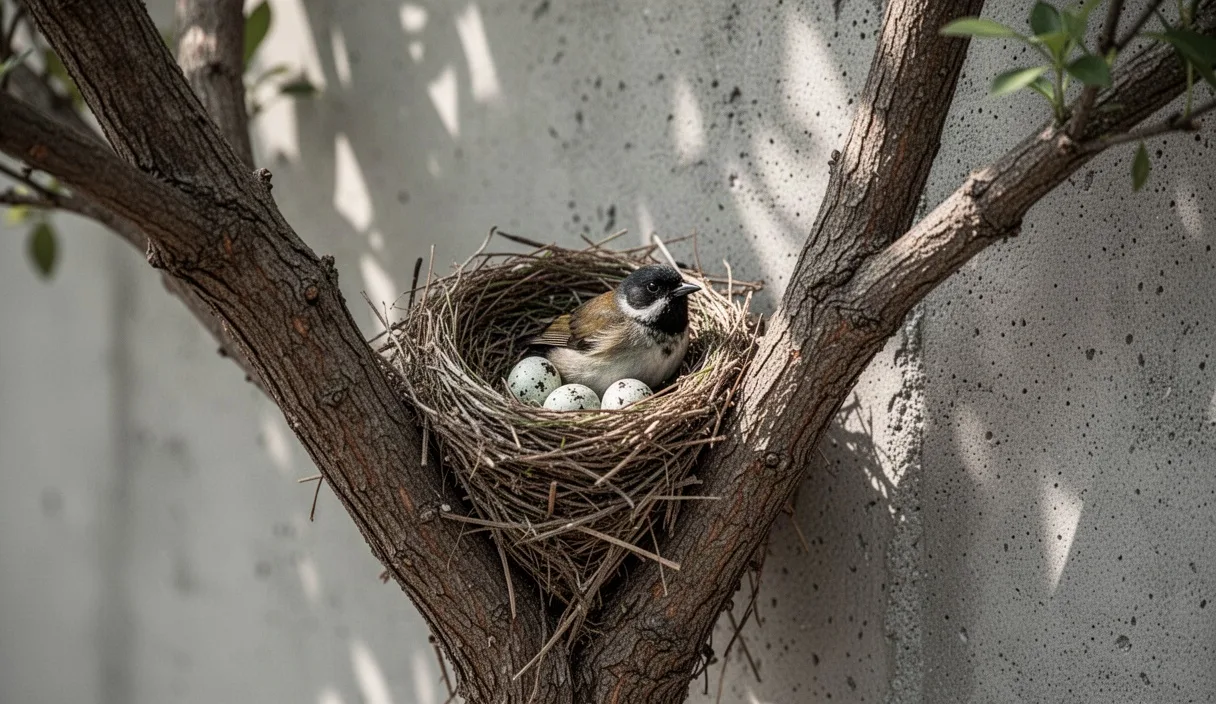
A nest in a hedge or eaves looks the same whether it holds eggs or sits empty. The difference matters. Disturbing an active nest can cause parent birds to abandon it, and in many regions that disturbance carries legal weight.
This guide walks through the physical signs that separate an active nest from a finished one. It covers timing, behavior, and what to do when the answer is unclear.
Why it matters to check before disturbing a nest
Many wild bird species are protected under laws such as the Migratory Bird Treaty Act in the United States or the Wildlife and Countryside Act in the UK. Moving or removing an active nest can violate these protections, even by accident.
Beyond legality, disturbance has a direct cost to the birds. A parent that feels threatened may stop returning to the nest, and eggs or chicks left unattended can die within hours in cold weather.
Checking first also protects the person doing the checking. Some species, including mockingbirds and crows, defend nests aggressively and will dive at anyone who gets close.
Signs of recent adult activity
An active nest shows wear that a finished or abandoned one does not. Fresh nesting material, like green moss or bright twine, sits on top of older, duller material.
Adult birds visiting a nest leave behavioral clues, not just physical ones. Watch from a distance of at least 10 to 15 feet for these signs:
- An adult flying to the same spot more than once within an hour
- An adult carrying food, usually insects or worms, toward the nest
- Alarm calls from a bird perched nearby when you approach
- Droppings on the ground or on leaves directly below the nest
A single sighting of a bird near a nest does not confirm activity. Birds land on old nests to rest or scout new sites. Two or more visits within a short window is a stronger signal.
Signs of nestlings inside
Sound is often the first clue. Nestlings make thin, repetitive chirping when a parent approaches, and the volume rises sharply right before feeding.
Visually, a nest with chicks inside often looks slightly disturbed at the rim, with bits of down or feather fluff caught on the edges. Fecal sacs, small white-and-dark pouches, sometimes sit near the nest or on nearby leaves; parents remove these to keep the nest clean, but a few get missed.
For nests low enough to view safely without touching them, a quick glance can confirm movement. Do not reach in or shift the nest to see better. If chicks are visible and calm, back away and observe from a distance instead.
Comparing nestling and egg-stage signs
| Stage | Sound | Visual cue | Parent behavior |
|---|---|---|---|
| Incubation (eggs) | Silent | Adult sitting still for long stretches | Adult leaves briefly, returns to sit again |
| Early nestling | Faint, occasional chirps | Slight movement at nest rim | Frequent short visits with food |
| Late nestling | Loud, frequent chirps | Chicks visible near rim, feathers showing | Constant activity, both parents feeding |
What an abandoned nest looks like
An abandoned nest often shows structural decline. Twigs loosen, the cup shape flattens, and rain-soaked material starts to mold or darken.
No droppings appear below an abandoned nest, since there are no chicks producing waste. Spiderwebs across the entrance are another sign, since active nests get disturbed too often for webs to form undisturbed.
If eggs remain in the nest for more than three to four weeks past when activity was last seen, they are almost certainly not viable. Most songbird eggs hatch within 12 to 14 days of full incubation.
A nest that has been abandoned mid-season, meaning eggs or chicks were present and then activity stopped suddenly, can indicate predation, disease, or severe weather. In these cases the nest structure may look intact but the eggs sit cold, with no adult in sight for a full day or more.
Seasonal timing to keep in mind
Nesting season varies by region and species, but in most of North America and the UK it runs from March through August. Some species, like mourning doves, nest as many as five or six times in a single season.
Early spring nests belong mostly to resident species such as robins and house sparrows. Migratory species, including many warblers and orioles, tend to nest later, from May into July, after they arrive from wintering grounds.
Late-season nests, built in July or August, are more likely to be second or third attempts after an earlier failure. These nests deserve the same caution as first attempts, since the parents have already invested time and energy they are unlikely to abandon without reason.
A nest found in winter, from November through February, is very likely inactive in most temperate climates. A few exceptions exist, including owls, which can begin nesting as early as January in some regions.
What to do if a nest seems active
The safest response to a possibly active nest is distance. Keep at least 10 feet away, more if the species is known to be defensive, and limit visits to brief, quiet observation.
If the nest is in a location that requires action, such as blocking a doorway or sitting in equipment that must run, wait if at all possible. Most nesting cycles, from egg-laying to fledging, take four to six weeks.
When waiting is not an option, contact a local wildlife rehabilitator or extension office before doing anything else. They can advise on whether the nest is active, what species is involved, and whether any local permit or exception applies.
Do not attempt to move an active nest, even a short distance, without professional guidance. Parent birds locate nests by memorized position, not by scent or sight of the nest itself, so a moved nest is often abandoned.
Common mistakes
Assuming a quiet nest is empty is a frequent error. Nestlings often go silent when a person approaches, since noise can attract predators, and they resume calling once the area feels safe again.
Touching a nest to check for eggs is another common misstep. Human scent does not always cause abandonment, but the physical disturbance to material and structure can.
Removing what looks like an old nest in early spring, before confirming no eggs are present, also causes avoidable harm. Many species reuse or rebuild on old nest sites within days.
Next steps
Start with distance and a few minutes of quiet observation before drawing any conclusion about a nest. Look for droppings, fresh material, and repeated adult visits rather than a single glance.
If the signs point to activity, or the situation is unclear, treat the nest as active until proven otherwise. A local wildlife rehabilitator, extension office, or state wildlife agency can confirm species and legal status for a specific case.
When a nest sits somewhere that must be disturbed, plan around the nesting cycle rather than around the nest itself. A delay of a few weeks is often the simplest way to avoid harming birds that have already invested significant effort in that spot.